





Cold-Weather RV Camping Tips for BC & Alberta
For many RVers in British Columbia and Alberta, camping season doesn’t have to end when summer does.
Fall can be one of the best times to enjoy the Okanagan, Kootenays and other parts of British Columbia and Alberta. The crowds thin out, the scenery changes, and there are still plenty of opportunities to get outside and enjoy your RV.
But once overnight temperatures start dropping, extended-season RV camping requires a little more preparation.
If you’re planning to stay in your RV into late fall, early winter or even through the colder months, you need to think beyond simply turning on the furnace.
Your RV’s plumbing, holding tanks, underbelly, water connections and interior humidity all become more important as temperatures fall.
The good news? With the right preparation, you can keep your RV comfortable and protect its critical systems while extending your camping season.
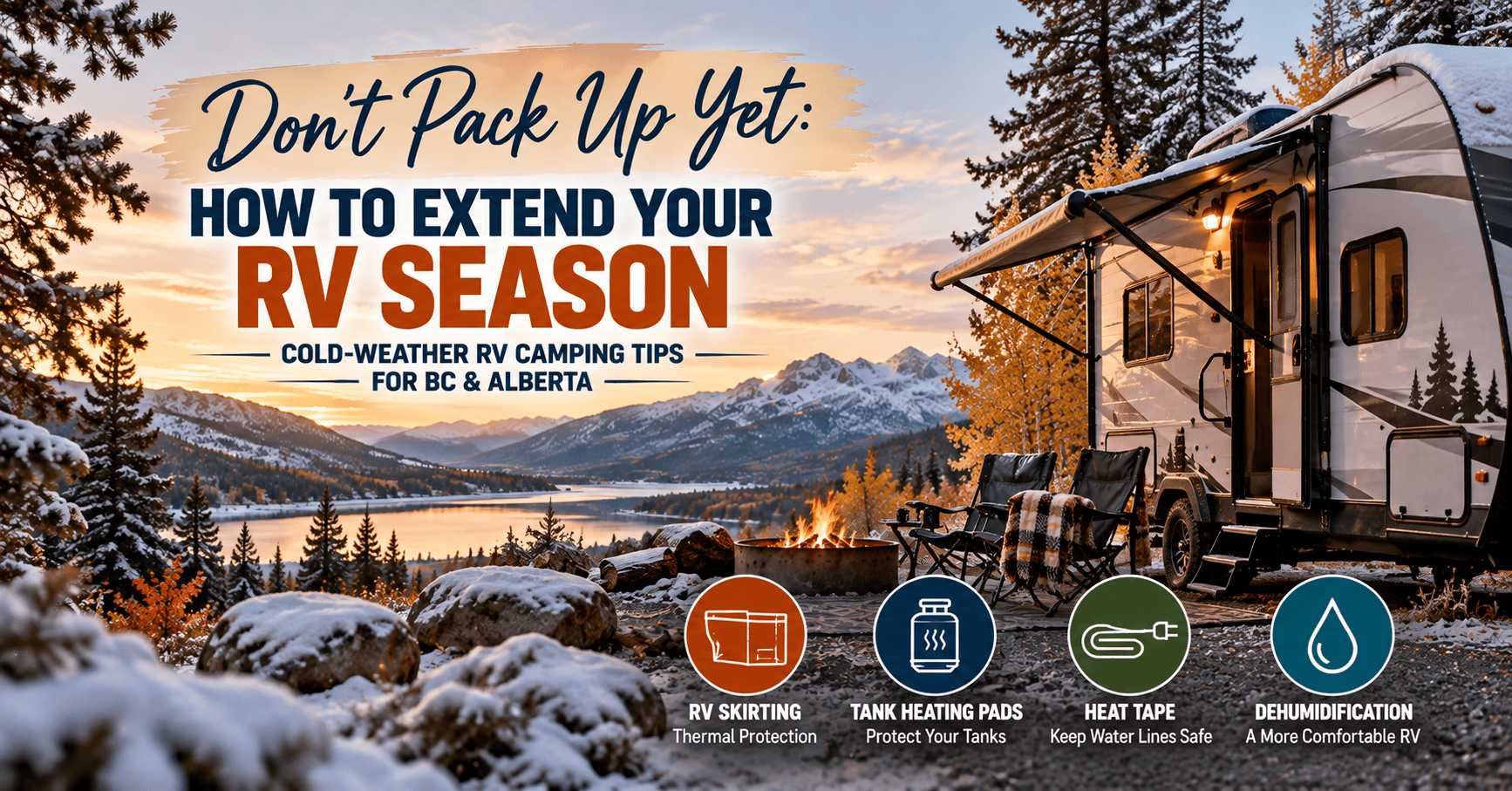
At Midtown RV in Penticton, some of the most important cold-weather upgrades we recommend looking at include:
- Thermal RV skirting
- Tank heating pads
- Heat tape
- Plumbing and water-system protection
- Proper insulation
- Dehumidification and moisture control
Here’s what you need to know before the temperature drops.
Why Extend Your RV Season?
There is something pretty special about RVing after the summer rush.
The Okanagan takes on its fall colours. The Kootenays become quieter and more peaceful. Campgrounds are less crowded, and you can experience some of BC’s best scenery without the peak-season traffic.
For full-time RVers, seasonal workers, snowbirds and campers who simply aren’t ready to put the RV away, extending the season can also mean getting considerably more use out of your RV.
But cold-weather camping changes the equation.
When temperatures fall below freezing, your RV’s plumbing and holding tanks can become vulnerable to freezing. Cold air can circulate underneath the RV, and moisture inside the coach can become a problem.
The goal isn’t simply to keep yourself warm. It’s to protect the RV as a whole.
RV Skirting: The Foundation of an Extended-Season Setup
If you’re planning to stay in one location for an extended period, RV skirting is one of the first upgrades to consider.
Skirting creates a barrier around the bottom of your RV, helping reduce the amount of cold air and wind circulating underneath the unit.
That can provide additional protection for areas such as:
- Holding tanks
- Water lines
- Drain plumbing
- Valves
- Underbelly components
- Flooring
- Other exposed areas underneath the RV
It can also help reduce heat loss through the floor, making the interior more comfortable.
Why does that matter?
Your RV’s furnace is working hard to maintain a comfortable interior temperature. If cold air is constantly moving underneath the coach, you’re fighting that cold from multiple directions.
Properly fitted thermal skirting can help create a more protected environment underneath the RV.
Think of it as another layer in your RV’s cold-weather defence system.
Does Every RV Need Skirting?
Not necessarily.
Your RV’s construction, insulation, underbelly design, tank location and intended use all matter.
A motorhome designed with a heated and enclosed basement may have different requirements from a travel trailer with plumbing located closer to the exterior.
The temperatures you’re expecting also matter.
There’s a big difference between:
“I’m camping a few weekends in October.”
and
“I’m living in my RV in the Kootenays through January.”
If you’re planning extended-season camping, it’s worth looking at your RV as a complete system rather than assuming one product will solve everything.
Tank Heating Pads: Protecting Your Holding Tanks
RV holding tanks are another important consideration when temperatures begin to drop.
Depending on your RV’s design, tanks may be located inside a heated area, within an enclosed underbelly or in an area that needs additional protection.
Tank heating pads can provide additional heat to vulnerable holding tanks and help reduce the risk of freezing.
Many tank heating pads are thermostatically controlled, meaning they activate when temperatures reach a certain point.
Before installing tank heaters, it’s important to understand your RV’s existing system.
Consider:
- Where your fresh, grey and black tanks are located
- Whether the tanks are already heated
- Whether the underbelly is heated
- Where the plumbing runs
- What temperatures you’ll be camping in
- How the heating pads will be powered
The right setup can vary considerably from one RV to another.
That’s where having your RV evaluated before installing equipment can save you headaches later.
Don’t Forget About Your Water Lines
Your holding tanks aren’t the only things that can freeze.
Water lines, valves, fittings and exterior connections can also be vulnerable when temperatures drop.
This is particularly important if you’re connected to a water source while camping.
Your cold-weather setup may need to address:
- Fresh-water connections
- City-water inlet
- Exterior plumbing
- Water lines
- Sewer connections
- Dump valves
- Drain lines
A warm RV interior doesn’t necessarily mean every part of the plumbing system is warm.
Knowing where your plumbing is located is an important first step in determining what protection your RV needs.
Heat Tape for Vulnerable Plumbing
Heat tape can be another useful component of an extended-season RV setup.
Depending on the application, appropriately rated heat tape can help protect vulnerable plumbing and water connections from freezing temperatures.
But this isn’t an area where you want to improvise.
Heat tape should be selected and installed according to the manufacturer’s specifications and the specific plumbing application.
Before installing it, make sure you know:
- What type of pipe or hose you’re protecting
- What temperature range you’ll be dealing with
- What type of heat tape is appropriate
- How it should be installed
- What electrical requirements it has
- Whether additional insulation is needed
The goal is to create a safe, reliable system, not simply wrap a heating cable around whatever looks cold.
If you’re unsure what your RV needs, talk to the Midtown RV Parts & Service team.
Cold Weather Isn’t Just About Freezing
Here’s another issue extended-season RVers need to think about:
Moisture.
When you’re living inside a warm RV while it’s cold outside, everyday activities create moisture.
Cooking.
Showering.
Breathing.
Drying wet clothing.
Even boiling a pot of water adds humidity to the interior.
When that warm, humid air comes into contact with cold windows, walls and other surfaces, condensation can form.
Over time, excessive moisture can contribute to:
- Wet windows
- Damp surfaces
- Musty odours
- Damp bedding
- Moisture around vents
- Potential damage to interior materials
That’s why moisture management should be part of your cold-weather RV plan.
Dehumidification Matters
A dehumidifier can be especially useful for RVers who are living in their coach during colder months.
The objective isn’t to make the RV bone-dry.
It’s to keep indoor humidity at a reasonable level while still maintaining a comfortable living environment.
You should also use appropriate ventilation when cooking and showering.
If you notice condensation building up regularly on your windows, that’s a good indication that you need to take a closer look at your RV’s moisture levels and ventilation.
The Okanagan vs. the Kootenays
Cold-weather RVing doesn’t look the same everywhere in BC.
The Okanagan and Kootenays can both offer excellent extended-season opportunities, but temperatures, elevation, exposure and weather conditions can vary significantly.
For someone camping around Penticton or the South Okanagan, the biggest concern may be protecting the RV during occasional overnight freezes.
Someone spending the winter in a higher-elevation area of the Kootenays may be dealing with prolonged freezing temperatures and snow.
That means there isn’t one universal cold-weather RV package.
Your RV and your camping conditions should determine the equipment you need.
Full-Time RVers Need to Think About the Whole System
If you’re living in your RV full-time, cold-weather preparation becomes even more important.
You aren’t simply protecting an RV that’s sitting unused.
You’re using the plumbing, appliances, furnace and electrical system every day.
Full-time RVers should consider:
Heating
Your furnace may be running considerably more often as temperatures fall.
Propane
Increased heating demand can mean increased propane consumption.
Electricity
Tank heating pads, heat tape, dehumidifiers and other equipment can add electrical loads.
Water
You’ll need a strategy for keeping fresh-water connections and plumbing from freezing.
Waste systems
Dump valves, sewer connections and wastewater systems also need consideration.
Condensation
Daily cooking, showering and living inside the RV can create significant moisture.
Power interruptions
A winter RV setup should include a plan for what happens if power is interrupted during freezing temperatures.
Cold-weather RVing works best when you prepare for the entire system instead of reacting to one problem at a time.
Think of Your Cold-Weather Setup in Layers
One of the easiest ways to understand extended-season RV preparation is to think about it in layers.
Layer 1: Thermal Protection
RV skirting
Helps reduce cold air movement underneath the RV and provides another layer of protection around the underbelly.
Layer 2: Tank Protection
Tank heating pads
Provide targeted heat for vulnerable holding tanks.
Layer 3: Plumbing Protection
Heat tape and insulation
Can provide additional protection for vulnerable water lines and connections when properly selected and installed.
Layer 4: Moisture Management
Ventilation and dehumidification
Help control the moisture produced by everyday life inside the RV.
Layer 5: Heating
Your RV’s furnace and heating system
Keep the interior comfortable and, depending on the RV’s design, may also contribute to protecting enclosed plumbing and tanks.
Together, these layers can create a much more comprehensive approach to extended-season RVing.
When Should You Install RV Skirting?
Don’t wait until the first major freeze.
If you know you’re planning to stay in your RV into late fall or winter, it’s much easier to prepare while the weather is still manageable.
Before temperatures consistently drop below freezing, consider:
☐ Installing RV skirting
☐ Checking your tank protection
☐ Inspecting water lines and connections
☐ Planning protection for vulnerable plumbing
☐ Checking your furnace
☐ Checking propane levels
☐ Testing your electrical system
☐ Setting up moisture control
☐ Checking weather conditions for your destination
It is much easier to install your cold-weather equipment on a cool October afternoon than when you’re standing outside in January trying to figure out why something has frozen.
What Does Your RV Actually Need?
This is probably the most important question.
There isn’t a one-size-fits-all answer.
Your RV may already have some cold-weather features built in.
It may have:
- A heated underbelly
- Heated holding tanks
- Insulated plumbing
- Enclosed utility areas
- Furnace ducting through the underbelly
- Other factory cold-weather features
But you may still need additional protection depending on where and how you’re using the RV.
At Midtown RV, we can help you look at your RV’s existing setup and determine what additional parts or upgrades may make sense for your extended-season plans.
Extend Your RV Season With the Right Preparation
You don’t have to put the RV away the moment summer ends.
Fall and early winter can be some of the most rewarding times to explore BC and Alberta.
But if you’re planning to keep camping when temperatures drop, preparation matters.
Start by looking at the areas most vulnerable to cold:
RV skirting for thermal protection underneath the coach.
Tank heating pads for additional holding-tank protection.
Heat tape for appropriate vulnerable plumbing and connections.
Insulation to reduce exposure to cold temperatures.
Dehumidification and ventilation to manage moisture inside the RV.
And most importantly, make sure all of these components work together with your RV’s existing systems.
Don’t Pack Up Yet.
Prepare your RV, protect your systems and extend the season.
Need Help Preparing Your RV for Extended-Season Camping?
The Midtown RV Parts & Service team in Penticton can help you find the right cold-weather products and determine what your RV may need before temperatures drop.
Whether you’re looking for RV skirting, tank heating pads, heat tape or other cold-weather RV equipment, talk to our team before the first hard freeze.
📍 310 Industrial Ave W, Penticton, BC V2A 9B3
📞 250-492-5705
Midtown RV | Based in Penticton, BC | Trusted Across Canada
FAQs
What is RV skirting?
RV skirting is a fitted barrier installed around the bottom of an RV to reduce cold-air movement underneath the coach and provide additional thermal protection.
Do I need RV skirting for fall camping?
It depends on your RV, location and expected temperatures. Skirting can be particularly useful for RVers planning extended stays during freezing weather.
What are RV tank heating pads?
Tank heating pads are heating elements designed to provide additional protection for RV holding tanks in freezing conditions. The appropriate product depends on your RV’s tank configuration.
Can heat tape prevent RV pipes from freezing?
Appropriately rated heat tape can provide additional protection for vulnerable plumbing, but it must be selected and installed correctly for the specific application.
How do I control condensation when RVing in winter?
Ventilation and dehumidification can help manage moisture created by cooking, showering and everyday living inside the RV.
Can I live in my RV during a BC winter?
Many RVers use their RVs during colder months, but the RV and its systems need to be appropriately prepared for the conditions. Your heating, plumbing, tanks, insulation, electrical system and moisture control all need to be considered.