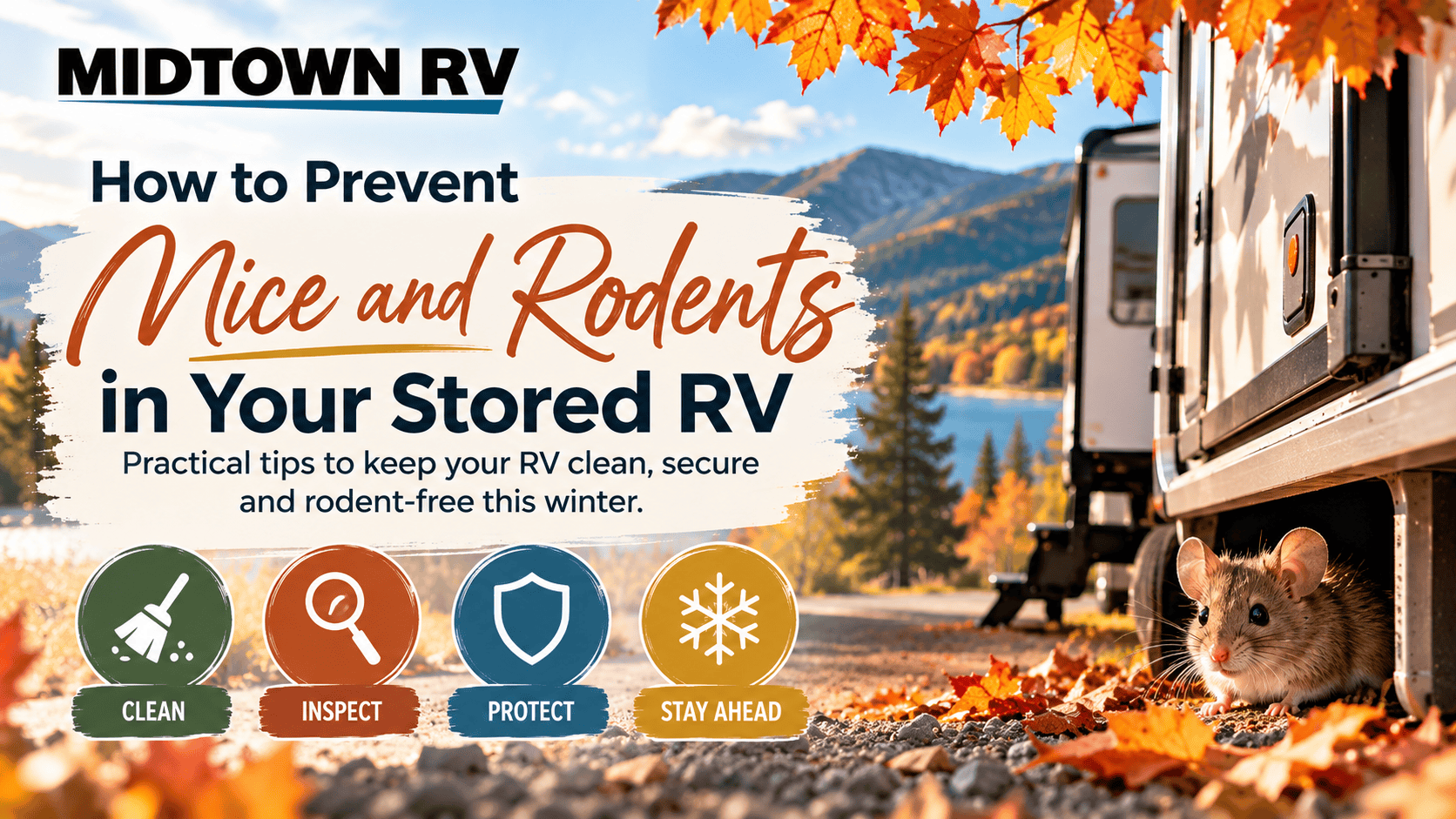




When camping season winds down in the Okanagan, many RVs are tucked away for the winter. But while you’re looking forward to spring adventures, mice and other rodents may be looking for somewhere warm, dry and undisturbed to spend the colder months.
Unfortunately, your motorhome, travel trailer or fifth wheel can offer everything they need: shelter, nesting materials and sometimes a few forgotten snacks.
Rodents can chew wiring, damage insulation, contaminate storage areas and leave behind unpleasant surprises. The good news? A little preparation before winter storage can help reduce the risk of unwanted visitors
Here are practical steps to help protect your RV before you put it away for the season.
Why Do Mice Get Into Stored RVs?
RVs have numerous openings for plumbing, electrical wiring, ventilation and other essential systems. Even small gaps can provide an entry point for mice.
Once inside, rodents may find quiet spaces behind cabinets, beneath furniture, inside storage compartments or around insulated areas where they can build nests.
An RV that sits unused for several months can be particularly vulnerable because signs of activity may go unnoticed until spring.
The best approach is prevention before storage, followed by occasional checks throughout the winter.
1. Give Your RV a Thorough Cleaning
Before storing your RV, remove anything that could attract rodents or provide nesting material.
Your cleaning checklist should include:
- Remove all food, including dry goods, snacks, spices and pet food.
- Empty the refrigerator and pantry.
- Vacuum crumbs from under furniture, dinette cushions and slide-out areas.
- Wipe down counters, cupboards and food preparation surfaces.
- Remove rubbish and recycling.
- Take out paper products, fabric scraps and other loose nesting materials where practical.
Don’t forget exterior storage compartments. Camping gear, pet supplies and forgotten food packages can be easy to overlook.
The goal is simple: make your RV less appealing as a place to settle in.
2. Inspect Your RV for Potential Entry Points
A clean RV is a good start, but it won’t help much if rodents can still get inside.
Before storage, inspect accessible areas around the exterior and underside of your RV. Pay particular attention to:
- Plumbing and water-line openings
- Electrical wiring pass-throughs
- Gaps around pipes and cables
- Damaged underbelly panels
- Exterior storage compartments and their seals
- Entry-step openings and accessible floor penetrations
- Damaged door, window and slide-out seals
Mice can squeeze through surprisingly small openings, so don’t overlook a gap just because it seems insignificant
Important: Don’t block ventilation openings, furnace exhausts, water-heater exhausts or other safety-critical openings. Don’t seal moving slide mechanisms or gas-system components without following the manufacturer’s instructions. If you find a gap near wiring, plumbing or propane equipment, have a qualified RV technician assess the correct repair.
3. Be Careful With Rodent Deterrents
Walk into almost any hardware store and you’ll find plenty of products promising to keep mice away. But not every deterrent works equally well in every RV.
Here are a few things to keep in mind.
Scent-based repellents: Some RV owners use commercial repellent pouches or peppermint-scented products. Treat these as supplementary measures rather than a substitute for closing entry points and removing food sources.
Ultrasonic devices: Don’t rely on plug-in devices as your primary protection. They don’t replace physical exclusion, cleaning and regular inspections.
Traps: Appropriately selected traps can help detect or control rodent activity. Place them where they cannot be reached by children or pets, and inspect them regularly.
Rodent poison: Avoid casually placing poison inside an RV. Rodents may die in inaccessible areas, creating odour and contamination problems, and bait can pose risks to children, pets and wildlife. If considering a pesticide, follow its Canadian label and applicable safety directions.
4. Think About Where You Store Your RV
Your storage location can influence how attractive the area is to rodents.
Where practical:
- Park on a clean, hard surface rather than in tall grass.
- Trim vegetation around the parking area.
- Remove nearby piles of wood, leaves and other debris.
- Keep birdseed, pet food and garbage in sealed containers away from the RV.
- Avoid storing loose cardboard, fabric or other nesting materials near the unit.
- Check for rodent activity in the surrounding storage area.
Outdoor storage isn’t automatically a problem, and indoor storage isn’t automatically rodent-proof. The important thing is to reduce nearby hiding places and make access more difficult.
5. Check Your RV During Winter Storage
Once your RV is parked, don’t assume it’s protected until spring.
A quick inspection every few weeks, when practical and safe, can help you catch signs of rodent activity early.
Look for:
- Droppings or nesting material
- Chewed packaging or fabrics
- Gnaw marks on accessible materials
- Damaged wiring or insulation
- Disturbed traps or deterrents
- New gaps or damage around the exterior
If you find signs of rodents, investigate before using the RV again. Chewed wiring can cause electrical faults and may create a fire risk, so have suspicious damage assessed by a qualified technician.
Remember to follow your RV manufacturer’s storage guidance, especially if your unit has been winterized.
6. What Should You Do If You Find Mice in Your RV?
Discovering signs of rodents can be frustrating, especially when you’ve taken steps to protect your unit.
Start by checking for obvious entry points and removing any remaining food or nesting materials. Don’t immediately reach into enclosed spaces or disturb droppings and nests.
Rodent droppings and urine can carry disease-causing organisms. Health authorities recommend wetting contaminated material with an appropriate disinfectant and following public-health cleanup guidance rather than sweeping or vacuuming dry droppings. Wear suitable protective equipment and take extra care if contamination is extensive.
If you find chewed wires, damaged plumbing, contamination in ventilation systems or evidence of a substantial infestation, arrange a professional assessment before taking the RV back on the road.
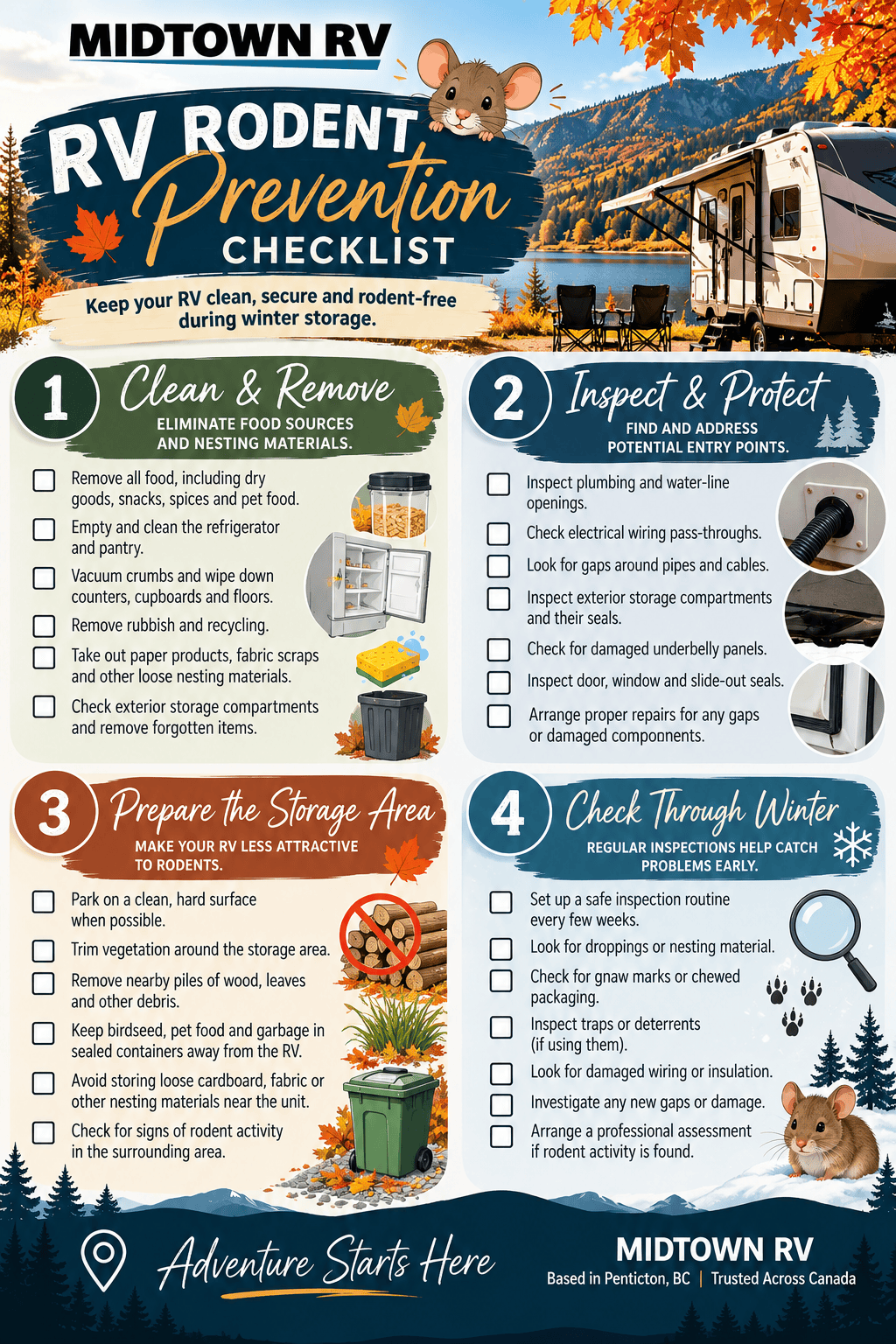
Your Pre-Storage Rodent Prevention Checklist
Save this checklist before putting your RV away for winter.
Protect Your RV Before Winter
Preparing your RV for winter involves more than protecting the plumbing from freezing temperatures. Cleaning, checking potential entry points and planning regular inspections can help reduce the risk of rodent damage while your unit is stored.
At Midtown RV, we’re here to help you prepare for the colder months and keep your RV ready for future adventures. If you notice damaged seals, underbelly panels or other issues that need attention before storage, contact our team to discuss your service needs.
Midtown RV | Based in Penticton, BC | Trusted Across Canada