





For many RV owners, the camping season doesn’t truly end until the first frost arrives. Whether you own a luxury motorhome, fifth wheel, travel trailer, or camper, preparing your RV for the Canadian winter is one of the most important maintenance tasks you’ll perform each year.
Even a small amount of water left inside your plumbing system can freeze, expand, and crack pipes, faucets, pumps, or your water heater. These repairs can easily cost hundreds or even thousands of dollars and may delay your first camping trip next spring.
The good news is that proper RV winterization is straightforward when it’s done correctly. In this guide, we’ll explain everything you need to know about winterizing your RV in Canada, common mistakes to avoid, and when it makes sense to leave the job to experienced RV technicians.
Why Winterizing Your RV Is So Important
Canadian winters can be unpredictable. In British Columbia, Alberta, Saskatchewan, and across Western Canada, overnight temperatures often dip below freezing long before significant snowfall arrives.
Water expands by approximately nine percent when it freezes. That expansion is enough to split plastic fittings, crack water pumps, damage faucets, rupture PEX plumbing lines, and even destroy an expensive water heater.
Proper winterization protects:
- Fresh water plumbing
- Water heater
- Water pump
- Toilets
- Kitchen and bathroom faucets
- Exterior shower connections
- Ice makers
- Washing machine hookups
- Water filters
- Holding tank plumbing
Considering that professional winterization costs only a fraction of the price of repairing freeze damage, it’s one of the smartest investments you can make before storing your RV.
When Should You Winterize Your RV?
One of the biggest mistakes RV owners make is waiting until the first snowfall. By then, overnight temperatures may have already caused damage.
A good rule of thumb is to winterize your RV before temperatures consistently reach 0°C (32°F) overnight.
Typical timelines include:
- Southern British Columbia: Late September to October
- Okanagan Valley: Usually October, depending on forecasts
- Alberta & Saskatchewan: September is often recommended
- Mountain regions: Even earlier due to colder overnight temperatures
If you’re unsure, remember this simple rule:
It’s always better to winterize a week early than one night too late.
What You’ll Need
If you’re planning to winterize your RV yourself, gather these supplies before you begin:
✔ RV/Marine antifreeze preferably Glycol based (pink, non-toxic)
✔ Water heater bypass kit (if equipped)
✔ Basic hand tools
✔ Socket or wrench for the water heater drain plug
✔ Gloves and towels
✔ Lubricant for rubber seals
✔ Air compressor (optional for blowing out water lines)
Important: Never use automotive antifreeze. It is toxic and not designed for RV potable water systems.
Step 1: Drain the Fresh Water System
Start by removing as much water from the RV as possible.
Drain:
- Fresh water tank
- Water heater
- Low-point drains
- Black and grey tanks
- Exterior shower
- Ice maker (if equipped)
- Washing machine plumbing (if equipped)
Open every faucet inside the RV, including hot and cold sides, allowing the system to empty completely.
If your RV has water filters, remove them before adding antifreeze. Water filters should never be left installed during winterization.
Step 2: Bypass the Water Heater
Most modern RVs have a water heater bypass system.
This allows antifreeze to flow around the water heater instead of filling it.
Without using the bypass, you could waste several gallons of antifreeze filling a tank that should remain empty during storage.
After draining the water heater:
- Turn the bypass valves to the winter position.
- Remove the drain plug or anode rod (if applicable).
- Leave the tank empty for winter.
Step 3: Blow Out the Water Lines (Optional but Recommended)
Many RV owners choose to blow compressed air through the plumbing before pumping antifreeze.
Benefits include:
- Removes more trapped water
- Requires less antifreeze
- Adds extra freeze protection
Use an RV blow-out adapter connected to your city water inlet and regulate air pressure to 30-40 PSI.
Work through each fixture one at a time until only air exits.
Step 4: Pump RV Antifreeze Through the Plumbing
Now it’s time to protect every plumbing line.
Using your RV’s water pump and winterizing kit, pump RV antifreeze through the system.
Open each fixture individually until pink antifreeze flows steadily.
Remember to do both hot and cold sides of:
- Kitchen sink
- Bathroom sink
- Shower
- Toilet
- Exterior shower
- Washer connections
- Dishwasher (if equipped)
- Refrigerator water dispenser or ice maker
Don’t forget to pour antifreeze into every drain to protect the P-traps.
Add a small amount to the toilet bowl as well to protect the seal.
Step 5: Prepare Your Batteries
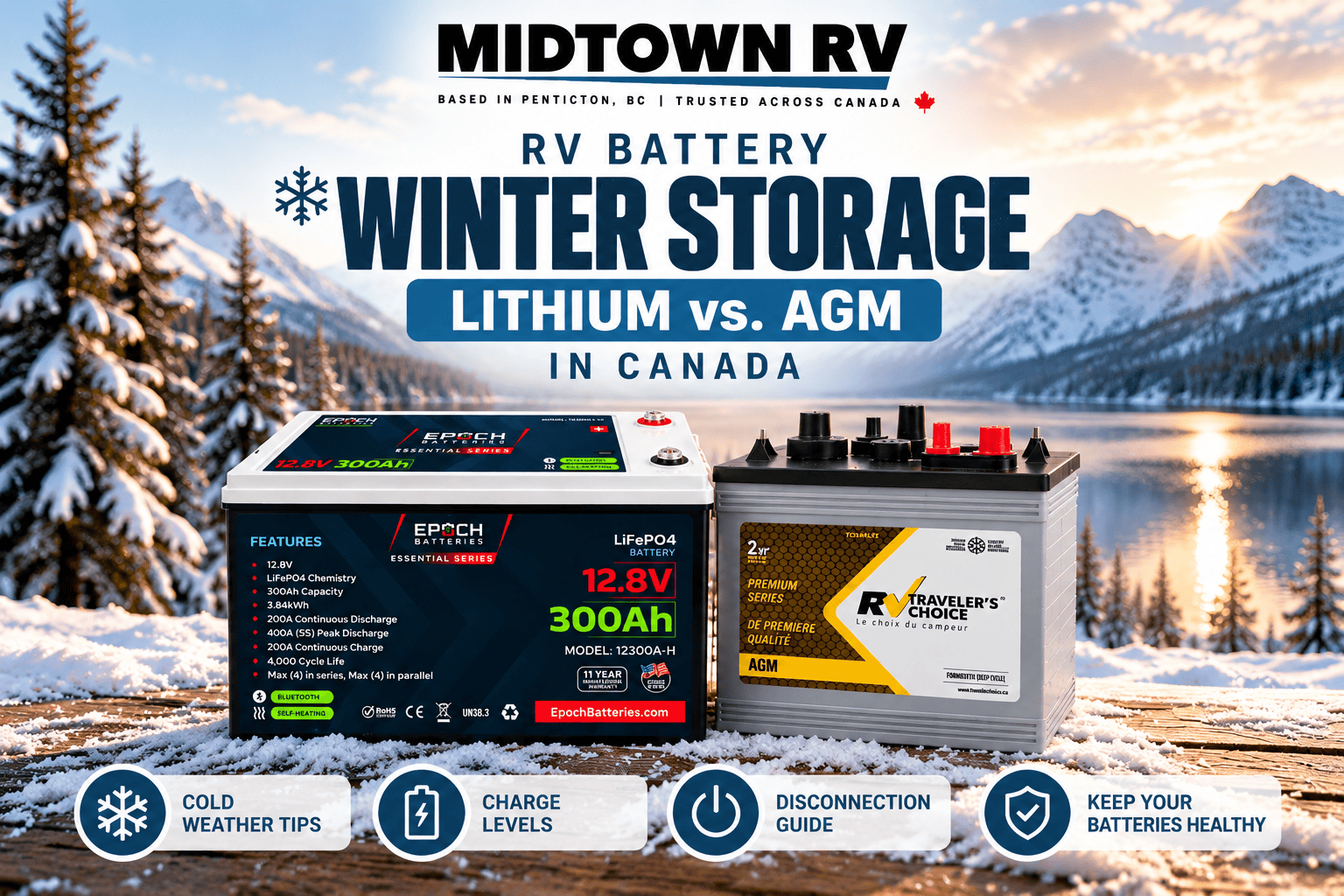
Cold temperatures can reduce battery performance and shorten battery life if they aren’t properly maintained.
For lead-acid batteries:
- Fully charge before storage
- Disconnect from the RV
- Clean battery terminals
- Check electrolyte levels (if applicable)
- Recharge periodically during storage
Lithium batteries generally require less maintenance but should still follow the manufacturer’s recommended storage procedures.
Step 6: Protect the Exterior
Winter isn’t just hard on plumbing.
Snow, moisture, UV exposure, and freezing temperatures can all affect your RV’s exterior.
Before storage:
- Wash the exterior thoroughly
- Apply wax if desired
- Inspect roof sealant
- Check window seals
- Lubricate slide-out seals
- Clean awnings before retracting
- Inflate tires to recommended pressure
- Install tire covers if stored outdoors
Taking a few extra hours now can prevent expensive repairs later.
Step 7: Prevent Rodents and Pests
As temperatures drop, mice and other pests look for warm places to spend the winter.
Your RV can become an attractive home if precautions aren’t taken.
Before storage:
- Remove all food
- Vacuum thoroughly
- Empty garbage bins
- Seal obvious openings
- Store linens in sealed containers
- Consider steel wool for larger access points
Many RV owners also use moisture absorbers inside the coach to help reduce condensation during winter storage.
Indoor vs. Outdoor RV Storage
Indoor Storage
Indoor storage offers the greatest protection.
Benefits include:
- Less UV exposure
- Protection from snow and ice
- Reduced moisture
- Cleaner exterior
- Longer roof life
Outdoor Storage
Outdoor storage works well when proper preparation is completed.
Consider:
- High-quality breathable RV covers
- Tire covers
- Roof inspections
- Snow removal after heavy storms
- Ventilation to reduce condensation
Regardless of where your RV is stored, winterization of the plumbing system is still essential unless the storage facility is heated year-round.
Common RV Winterization Mistakes
Even experienced RV owners occasionally overlook important steps.
Some of the most common mistakes include:
❌ Forgetting the outdoor shower
❌ Leaving water filters installed
❌ Not bypassing the water heater
❌ Using automotive antifreeze
❌ Forgetting refrigerator water lines
❌ Not protecting P-traps
❌ Ignoring battery maintenance
❌ Skipping roof inspections
❌ Waiting until after the first freeze
Avoiding these simple mistakes can save you significant repair costs next spring.
Should You Winterize Your RV Yourself or Hire a Professional?
Many RV owners successfully winterize their own trailers every year.
However, modern RVs have become increasingly sophisticated.
Luxury motorhomes and larger fifth wheels may include:
- Residential refrigerators
- Washer and dryer systems
- Aqua-Hot hydronic heating
- Multiple bathrooms
- Ice makers
- Exterior kitchens
- Outdoor showers
- Water filtration systems
Missing just one plumbing fixture can lead to expensive freeze damage.
Professional RV technicians know exactly where water hides and ensure every component is protected before winter storage.
Trust Midtown RV to Winterize Your RV
If you’d rather enjoy peace of mind than worry about missing a step, the experienced service team at Midtown RV is here to help.
Our professional winterization service is designed to protect your investment through the harsh Canadian winter.
Our technicians can:
- Drain and protect your plumbing system
- Properly bypass your water heater
- Pump RV-safe antifreeze throughout the plumbing
- Inspect for leaks or potential issues
- Check batteries and recommend maintenance
- Inspect roof seals and exterior components
- Answer any questions about winter storage
Every RV is different, and our team understands the unique systems found in today’s motorhomes, fifth wheels, travel trailers, and campers.
Because fall is one of the busiest seasons in our service department, we recommend booking your winterization appointment early before the schedule fills up.
Frequently Asked Questions
How much does it cost to winterize an RV?
Costs vary depending on the size of the RV and its plumbing systems. Professional winterization is typically far less expensive than repairing freeze damage.
Can I use automotive antifreeze?
No. Only use RV/Marine antifreeze that is specifically designed for potable water systems.
Do I need to winterize if my RV is stored indoors?
Yes. Unless your storage building remains heated above freezing throughout the winter, your RV should still be winterized.
What happens if I forget to winterize?
Water trapped inside plumbing can freeze, expand, and crack pipes, pumps, water heaters, valves, and fittings, resulting in costly repairs.
Can I winterize my RV myself?
Absolutely. Many owners do. However, larger RVs with multiple plumbing fixtures and luxury systems often benefit from professional service.
When should I de-winterize my RV?
Most Canadian RV owners de-winterize in early spring before their first camping trip by flushing the antifreeze, sanitizing the fresh water system, and inspecting all plumbing components.
Protect Your RV Before Winter Arrives
Winterizing your RV is one of the simplest ways to protect your investment and ensure you’re ready for another season of adventure when spring returns. Whether you enjoy weekend getaways around the Okanagan or cross-country trips across Canada, taking the time to winterize properly can save you from unexpected repairs and costly downtime.
If you’d like the confidence of having your RV professionally prepared for winter, the team at Midtown RV is ready to help.
Midtown RV
310 Industrial Ave W
Penticton, BC
Call us today: 250-492-5705
Book your winterization appointment early and let our experienced technicians help protect your RV for the season ahead.